


\n
The result is an optimal spectrum suitable for all phases of plant growth. The combination of white and red LEDs results in a relatively high proportion of blue light.
The proportion of blue light promotes compact plant growth during the vegetative phase and optimizes morphogenesis and light absorption by the plant. The red component of light is crucial for the flowering phase and yield.
\n
An expansion of the light spectrum is possible through the use of our compatible UV-A and far-red add-ons. Three different versions are available: UV-A, NIR, or UV-A+NIR, which can be used within a single setup. Each add-on has its own distinct, characteristic spectrum. The specific application of the additional lights must be considered. For example, a combination of UV-A and NIR with separate timers can achieve maximum effect. For those who prefer simpler solutions, the combined UV-A and NIR add-on is the optimal option.
\n
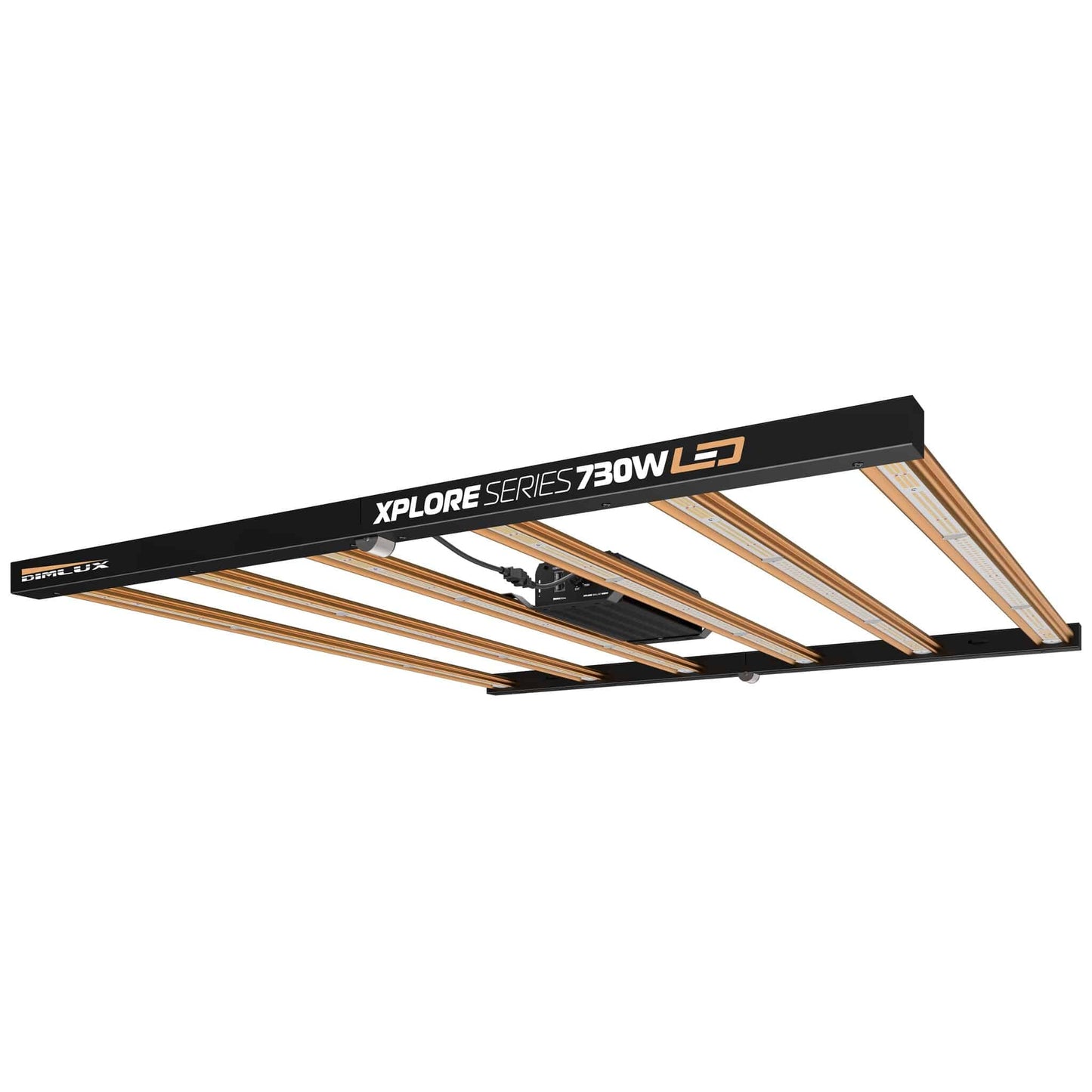
The Xplore 730 W digital ballast, which can be mounted directly on the luminaire or remotely, allows the LED luminaire to be controlled via the Maxi-Controller or the dimmer knob. Dimming to 250 W, 400 W, 600 W, or 730 W is possible to achieve maximum light output.
Installation can be simple and straightforward, provided there is the possibility to adjust the height of the light using a rope ratchet so that it can keep pace with the growth of the plants.
\n
\n
\n
\n
\n



Bonnie and Clyde
Clearly selected CBD flowers
- Carefully trimmed, consistent quality.
- Strain & Batch transparently indicated (THC ≤ 1.0 %).
- Described neutrally – without empty promises.
Fast delivery to Switzerland, discreetly packaged.
